It takes 8 to 12 sales touches to book a B2B meeting, not one clever email. That is the number almost nobody wants to hear, because it is boring and it means the problem was never your subject line. In five-plus years selling B2B SaaS, closing single deals over 120K euros and roughly 4M in career revenue, the pattern held every single time: the reply that turns into revenue rarely comes on touch one. It comes on touch six, seven, sometimes nine, from someone who was interested the whole time and just had a job to do that was not answering you.
So let me give you the actual number of sales touches to book a meeting, the cadence that converts, and the reason your current sequence is quietly dying at touch three.
The real number of sales touches to book a meeting
Here is the uncomfortable math. Most reps send one or two emails and then decide the prospect is not interested. Meanwhile the data across pretty much every serious outbound team I have seen, plus my own numbers, says the meaningful conversion window opens between touch four and touch nine. You are quitting exactly where the money starts.
the realistic range for a cold B2B meeting
roughly half of reps stop after a single follow-up
the active sequence window before nurture
A touch is not just an email. A touch is any deliberate, relevant contact: a cold email, a LinkedIn connection request with context, a comment on their post, a voicemail, a personalised video, a reply to something they published. What does not count is the same templated “just circling back” note four times. That is one touch repeated, not four touches, and the prospect experiences it as noise.
The reason this matters so much: your best-fit buyers are the busiest people. The CFO evaluating your platform is not ignoring you because she hates you, she is ignoring you because she has forty other fires. The prospects who reply instantly are often the ones with the least on their plate, which is not always a great signal about budget or urgency. Persistence is how you reach the people who can actually sign.
Why your sales touches stall at touch three
Almost every stalled cadence I audit has the same three problems, and none of them are about volume.
First, the follow-ups add nothing. “Hi [first name], just bumping this to the top of your inbox.” That is not a touch, that is a guilt trip. Every single message needs to give the prospect a reason that this one is worth ten seconds: a relevant number, a customer like them, a specific observation about their business, a resource they can actually use.
Second, it is all one channel. If every touch is email, you are betting your entire pipeline on your emails landing in the primary inbox and getting opened. That is a bad bet in 2026. When you spread across email, LinkedIn, and phone, each channel reinforces the others. They see your email, then your name pops up on LinkedIn, and suddenly you feel like someone real rather than a sending domain.
Third, and this is the big one, people are automating the wrong half of the job. I wrote a whole piece on why sales automation fails in B2B and the short version is this: automating the sending is fine, automating the thinking is fatal. When your cadence feels like it came off a conveyor belt, more touches just means more evidence that you do not actually care.
| Touch | Avoid | Do this |
|---|---|---|
| Follow-up 2 | Just checking in on my last email. | Saw you just hired 3 SDRs, ramp time is where this usually bites, here is how one team fixed it. |
| Channel | Email, email, email, email. | Email, LinkedIn comment, call, email, LinkedIn message. |
| Timing | Same time, same day, every touch. | Vary the day and hour, catch them when they are actually at the desk. |
| The ask | Do you have 30 minutes for a demo? | Worth a 15-minute look at whether this even fits? Happy to send a Loom instead if easier. |
The cadence that actually converts
Here is a cadence I have run and refined across multiple B2B SaaS motions. It sits at 10 touches over about three and a half weeks, which lands right in the sweet spot. Adjust the channel weighting to where your buyers live, but keep the shape.
Notice the channel split: roughly half email, a third LinkedIn, the rest phone. Notice also that value shows up before the ask does, every time. And notice the break-up. Do not skip the break-up. A shocking number of meetings get booked in the two days after you say you are giving up, because that is the moment the prospect realises the option is about to disappear.
Making 8 to 12 touches actually possible
Here is the obvious objection: ten touches per prospect across three channels, at any real volume, sounds like a full-time job with no time left to sell. Correct. That is exactly where most teams give up and collapse back to one-and-done email. The answer is not to do less, it is to build the system that lets you do more without turning into a robot.
The trick is separating the mechanical parts from the human parts. Sending, sequencing, reminders, list hygiene, enrichment: automate all of it. The relevance layer, the actual reason each message exists: that stays human, or at least human-supervised. I walked through exactly how to build this in building an AI prospecting system for B2B, and the whole point is using AI to research and draft so you can personalise ten touches in the time it used to take to send three generic ones.
You do not need an expensive stack to do this either. Most of what you need runs on tools you can afford well before you cross a million in ARR. I broke down a lean setup in the SaaS sales tool stack under 1M ARR, because the number of founders overpaying for bloated platforms they use 10 percent of is genuinely painful to watch.
And if you are selling into Europe specifically, the cadence changes shape. August is dead. Different countries have different rhythms and different tolerance for directness. A German buyer and an Italian buyer do not respond to the same nine touches the same way. I go deep on this in the European B2B SaaS sales playbook, and it is the single most underrated variable for anyone running outbound across the continent.
What persistence looks like when it works
Let me make this concrete rather than theoretical. When we ran outbound for the Venture Challenge, the result was 170 qualified leads in 90 days and 25 teams signing on at 5K each. None of that came from single-touch magic. It came from a disciplined multi-channel cadence where nobody got dropped at touch two just because they went quiet. With IKI Health, the same principle produced 30-plus qualified calls in the first month and two high-ticket deals, and again, several of those calls were booked deep into the sequence by people who ignored the first few touches entirely.
The lesson from both is annoyingly simple: the meetings were sitting there the whole time. The only thing standing between the team and those meetings was the willingness to keep showing up with something useful past the point where it felt comfortable.
The bottom line on sales touches to book a meeting
Stop optimising the first email like it is the whole game. It is roughly one twelfth of the game. Build a cadence of 8 to 12 relevant touches across email, LinkedIn, and phone, spread over three to four weeks, put value before every ask, and do not skip the break-up. Then automate the mechanics so the maths actually works at volume. That is it. That is the whole secret, and it is boring, and it works.
If your outbound is stalling at touch three and you want a second pair of eyes on the cadence, the messaging, and where the meetings are leaking out, that is exactly what I do. Take a look at how I work as a B2B sales consultant, or just book a sales audit and we will pull your sequence apart together and rebuild the parts that are costing you meetings. Bring your current numbers, we will find the touch where you are quitting too early.
Frequently Asked Questions
How many sales touches does it really take to book a B2B meeting?
For most B2B SaaS deals it takes 8 to 12 meaningful touches across email, LinkedIn, and phone before a prospect books. The single-email approach converts almost nobody. The people who reply on touch 7 are not a rounding error, they are often your best-fit buyers who were just busy the first six times.
How long should a sales cadence run before I give up?
Run a focused cadence over roughly 3 to 4 weeks, then move the contact to a lighter long-term nurture instead of deleting them. Most reps quit after two or three touches, which means the deals sitting at touch six are effectively uncontested. Persistence with relevance, not just volume, is what wins.
Should sales touches be all email or a mix of channels?
Mix them. A cadence that is only email gets filtered and ignored, but email plus LinkedIn plus one or two well-timed calls compounds because each channel reminds the prospect of the other. Aim for something like half email, a third LinkedIn, and the rest phone, adjusted to where your buyers actually pay attention.
Want this run on your pipeline?
€500, 90 minutes. Credited against any Build.
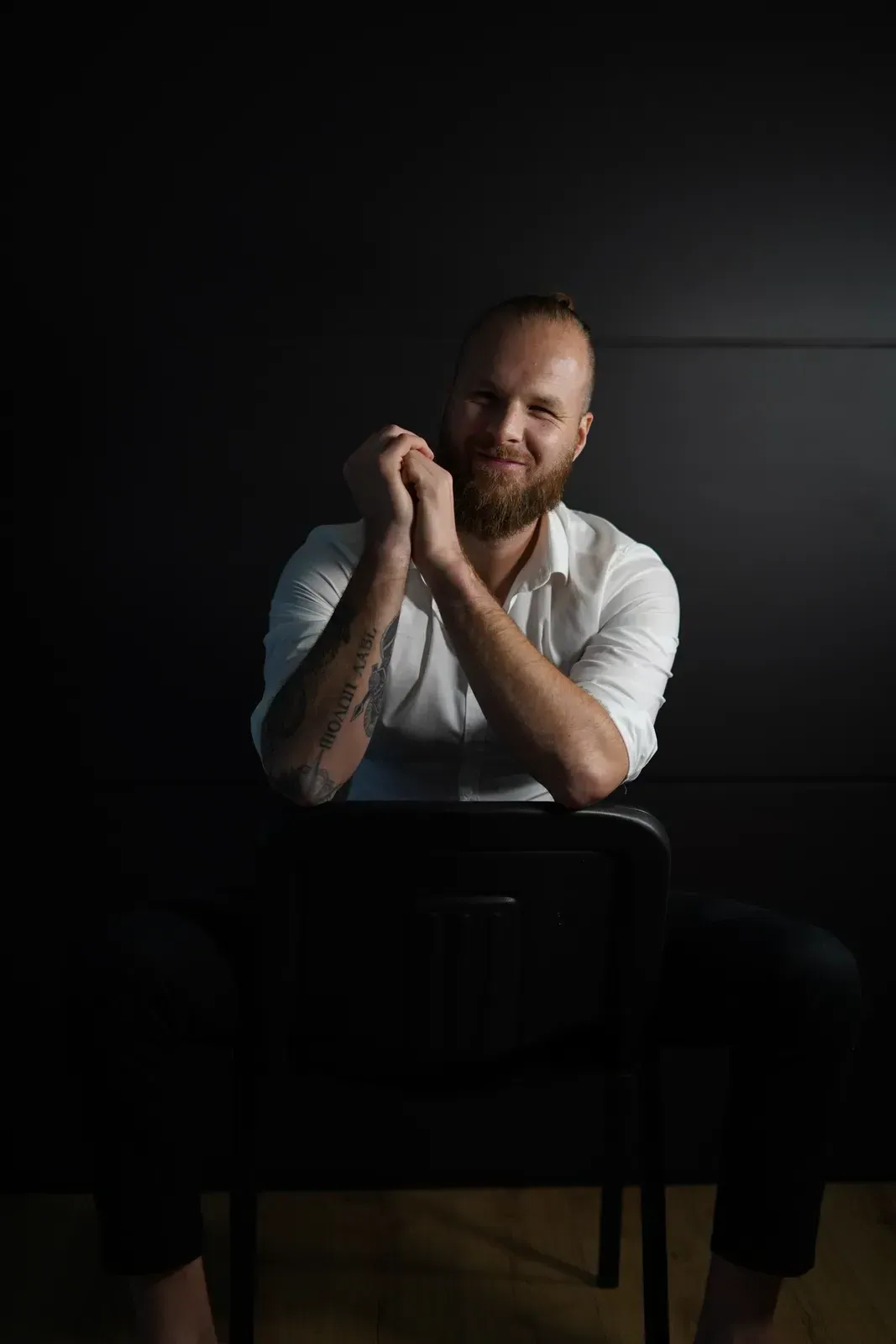
Wouter van de Velde
14 years as a B2B sales operator, 8 of them in B2B SaaS. €4M+ generated in revenue. Now builds sales systems for Dutch and EU SaaS founders who'd rather be shipping product.
LinkedIn →