The b2b sales process stages that actually matter are prospecting, outreach, discovery, demo, proposal, objection handling, close, and expansion - but the money is in how cleanly you move a deal from one to the next, not in how many boxes you draw in your CRM. I’ve spent 8 years selling B2B SaaS, closed north of €4M in career revenue, and signed single deals worth €120K. And the thing nobody tells you when you’re starting out is this: most founders don’t have a leaky funnel because they’re bad at selling. They have a leaky funnel because they have no idea which stage a deal is actually in.
So let me walk you through the whole thing, end to end, the way I’d explain it to you over a coffee in Palma. Not the LinkedIn version. The real one.
What the b2b sales process stages actually are
A sales process is just a shared definition of “what has to be true for this deal to move forward.” That’s it. Each stage has an entry criterion (what got it here) and an exit criterion (what has to happen before it moves on). If you can’t say out loud what has to be true for a deal to leave discovery, you don’t have a discovery stage. You have a hope.
Here’s the shape most healthy B2B SaaS motions follow. Six to eight stages, tops. More than that and your reps start gaming the CRM instead of moving deals.
Enough to track reality, few enough to actually use
Rough rule: carry 3x your target in open pipeline
A rough healthy demo-to-close on qualified deals
If you’re building this from scratch, I’d start with the mechanics of a repeatable sales process for SaaS before you obsess over the stage names. Names are cosmetic. Exit criteria are everything.
Stage 1: Prospecting and targeting
Everything downstream is decided here, and almost nobody gives it the weight it deserves. If you prospect badly, you’ll spend the next two months running beautiful demos for people who were never going to buy.
The job at this stage is brutally simple: build a list of accounts that look like the deals you’ve already won. Same industry, same rough headcount, same trigger event (new funding, a new VP, a hiring spree, a compliance deadline). For my clients doing early sales, I want a named list of 50 to 100 accounts with a specific reason each one belongs on it. Not “SaaS companies in Europe.” That’s not a list, that’s a wish.
Exit criterion: the account matches your ideal customer profile and you have a real reason to reach out this month, not “someday.”
Stage 2: Outreach and connect
Now you reach out. Cold email, LinkedIn, warm intro, whatever. The stage isn’t “I sent a message.” The stage is “they replied and we booked time.” A sent email that goes nowhere is not pipeline. It’s activity, and activity is the thing founders hide behind when deals aren’t closing.
Keep the message about them. One specific observation about their business, one sentence on why that connects to a problem you solve, one clear ask. No pitch. No feature list. No “I’d love to show you our platform.” I don’t care about your platform and neither do they, yet.
When I ran outreach for Venture Challenge, that discipline is what produced 170 qualified leads in 90 days across 25 teams paying €5K each. Not clever copy. Relentlessly relevant targeting plus a clear ask.
Exit criterion: a meeting is on the calendar with someone who could plausibly buy.
Stage 3: Discovery - the stage that decides the deal
This is where deals are won and lost, and it’s the stage founders rush through because they’re desperate to demo. Fight that urge. A demo before discovery is you talking to yourself.
Discovery is where you find the pain, the cost of that pain, the timeline, the budget, and the people who have to say yes. If you leave the call not knowing what happens if they do nothing, you didn’t do discovery. You did a nice chat.
I have a whole list of the exact discovery call questions I use, but the spine of it is: What made you take this call now? What have you already tried? What does this cost you if it stays broken? Who else cares about fixing it? When someone answers those honestly, they’re half-selling themselves.
Exit criterion: you can write one sentence - this buyer has [pain], costing [amount], needs it fixed by [date], and [named people] decide.
Stage 4: Demo and solution mapping
Now, and only now, you show the product. And you don’t show all of it. You show the two or three things that map directly to what they told you in discovery. A great demo is you saying “you mentioned X was killing your team - here’s exactly how that goes away” three times in a row.
The most common demo mistake is the feature tour. Twenty minutes of clicking through menus while the buyer’s attention quietly dies. Every screen you show should answer a problem they named. If it doesn’t tie to something from discovery, cut it.
| Situation | Weak move | Strong move |
|---|---|---|
| Opening the demo | ”Let me give you a quick tour of the platform" | "You said onboarding takes your team 3 days - let me show you that first” |
| A feature they didn’t ask about | Show it anyway because you’re proud of it | Skip it, or park it for later |
| End of the demo | ”So, what do you think?" | "Based on what you’ve seen, does this solve the thing costing you €X?” |
Exit criterion: the buyer agrees the solution fits and is willing to talk pricing or next steps.
Stage 5: Proposal and pricing
By now pricing should be almost boring, because you’ve been talking about the cost of their problem the whole way through. If the number surprises them, you priced in a vacuum instead of anchoring against the pain you quantified in discovery.
Keep the proposal tight. What they get, what it costs, what changes for them, and a clear next step with a date. Don’t send a 14-page PDF that needs its own onboarding. And send it live where you can, or at least walk them through it - a proposal emailed into silence is a proposal that dies in silence.
If you don’t have a standard structure for this, that’s exactly what a sales playbook is for - so every proposal isn’t reinvented from scratch at 11pm.
Exit criterion: pricing is on the table and the buyer is engaging with it, not ghosting.
Stage 6: Objection handling and negotiation
Objections aren’t the buyer saying no. They’re the buyer telling you what still has to be true for them to say yes. “It’s too expensive” almost never means the price. It means “I don’t yet believe the return,” or “I can’t defend this to my boss,” or “a competitor quoted less.” Different objections, completely different responses.
The move is to get curious before you get defensive. “Too expensive compared to what?” is a better response than a discount. I’ve written up how I handle the common B2B SaaS objections line by line, but the mindset is the whole game: an objection is a buying signal wearing a disguise. Someone who’s not interested doesn’t bother objecting. They just disappear.
On negotiation - protect price, trade on terms. If you have to give something, give a longer contract, a case study, a faster payment, a logo. Don’t just knock 20% off because they frowned. That teaches your buyer that your price is fiction.
Exit criterion: the real blockers are surfaced and resolved, and there’s a verbal yes pending paperwork.
Stage 7: Close
Closing isn’t a magic phrase. It’s the natural result of having done every previous stage properly. If you did discovery right, quantified the pain, mapped the demo, and cleared the objections, the close is mostly logistics - contract, signature, start date.
What kills deals at this stage is drift. The buyer’s ready, but nobody drives the last mile, so the deal slides a week, then a month, then into next quarter’s “maybe.” Your job is to keep a specific next step with a specific owner and a specific date at all times. Always be able to answer: what’s the very next thing that has to happen, who does it, and by when?
Exit criterion: signed, and everyone knows what happens on day one.
Stage 8: Onboarding, handoff, and expansion
Here’s the stage the classic funnel forgets, and it’s where the actual money lives in SaaS. A signed deal isn’t revenue. Retained, expanding revenue is. In subscription businesses, the customer who stays two years and upgrades is worth several times the one who churns in month four, no matter how impressive the initial close was.
So treat the handoff as part of sales, not a thing you throw over the wall. Make sure whoever owns onboarding knows the pain you sold against, the outcome the buyer expects, and the date they want to see a result. When I worked with IKI Health, the motion generated 30+ calls in month one and two high-ticket deals - and the reason those held is that the promise made in the sale matched what the customer actually got.
Exit criterion: the customer hits their first real outcome and there’s a live conversation about doing more.
The stages are a map, not the territory
Don’t fetishize the framework. The stages exist so you can answer three questions at any moment: where is this deal, what has to be true for it to move, and what’s the next specific action. If your CRM can’t answer those, tidier stage names won’t save you.
The founders who win at this aren’t the smoothest talkers. They’re the ones with a boring, repeatable process where every deal has a clear next step and nothing falls through the cracks. That’s genuinely learnable, and it’s most of what I help teams install when we work on their B2B SaaS sales process together.
If your pipeline feels more like a haunted house than a process - deals wandering around with no clear stage, forecasts that are basically guesses - that’s fixable, usually faster than you’d think. Book a sales audit and I’ll map your actual funnel, show you exactly where deals are leaking, and give you the stage-by-stage fix. No fluff, no sales-bro theatre. Just the process I’ve used to close €4M+ and the honest version of what’s slowing you down.
Frequently Asked Questions
What are the main b2b sales process stages?
The core stages are prospecting, outreach, discovery, demo, proposal, objection handling and negotiation, close, and post-sale expansion. Most B2B SaaS companies run six to eight named stages in their CRM. The exact number matters less than making each stage have a clear entry and exit criterion so you always know what has to be true for a deal to move forward.
How long should a B2B SaaS sales cycle take?
It depends almost entirely on deal size and who has to sign. A €500/month self-serve-ish deal can close in one or two calls over a couple of weeks. A €50K+ enterprise deal with security review and multiple stakeholders can take three to six months. If your cycle feels random rather than predictable, that's usually a discovery problem, not a timing problem.
Where do most B2B SaaS deals get stuck?
Between discovery and demo, and again between proposal and close. Deals stall at discovery when you never surfaced real pain or a real timeline, so there's nothing pulling the buyer forward. They stall at proposal when you sent pricing before you built enough value, or when there's a hidden decision-maker you never met. Fix discovery and you fix most of the downstream leakage.
Want this run on your pipeline?
€500, 90 minutes. Credited against any Build.
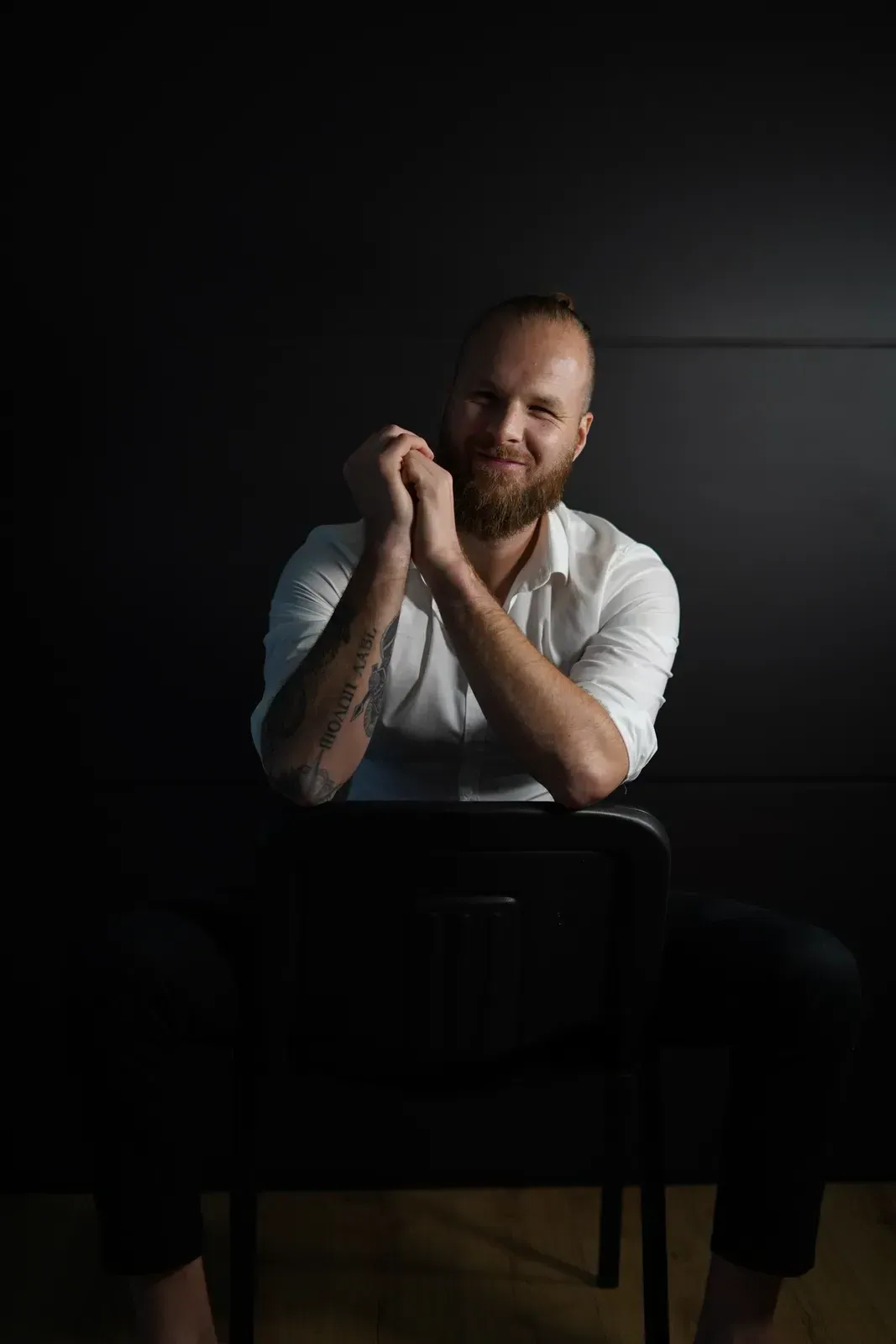
Wouter van de Velde
14 years as a B2B sales operator, 8 of them in B2B SaaS. €4M+ generated in revenue. Now builds sales systems for Dutch and EU SaaS founders who'd rather be shipping product.
LinkedIn →